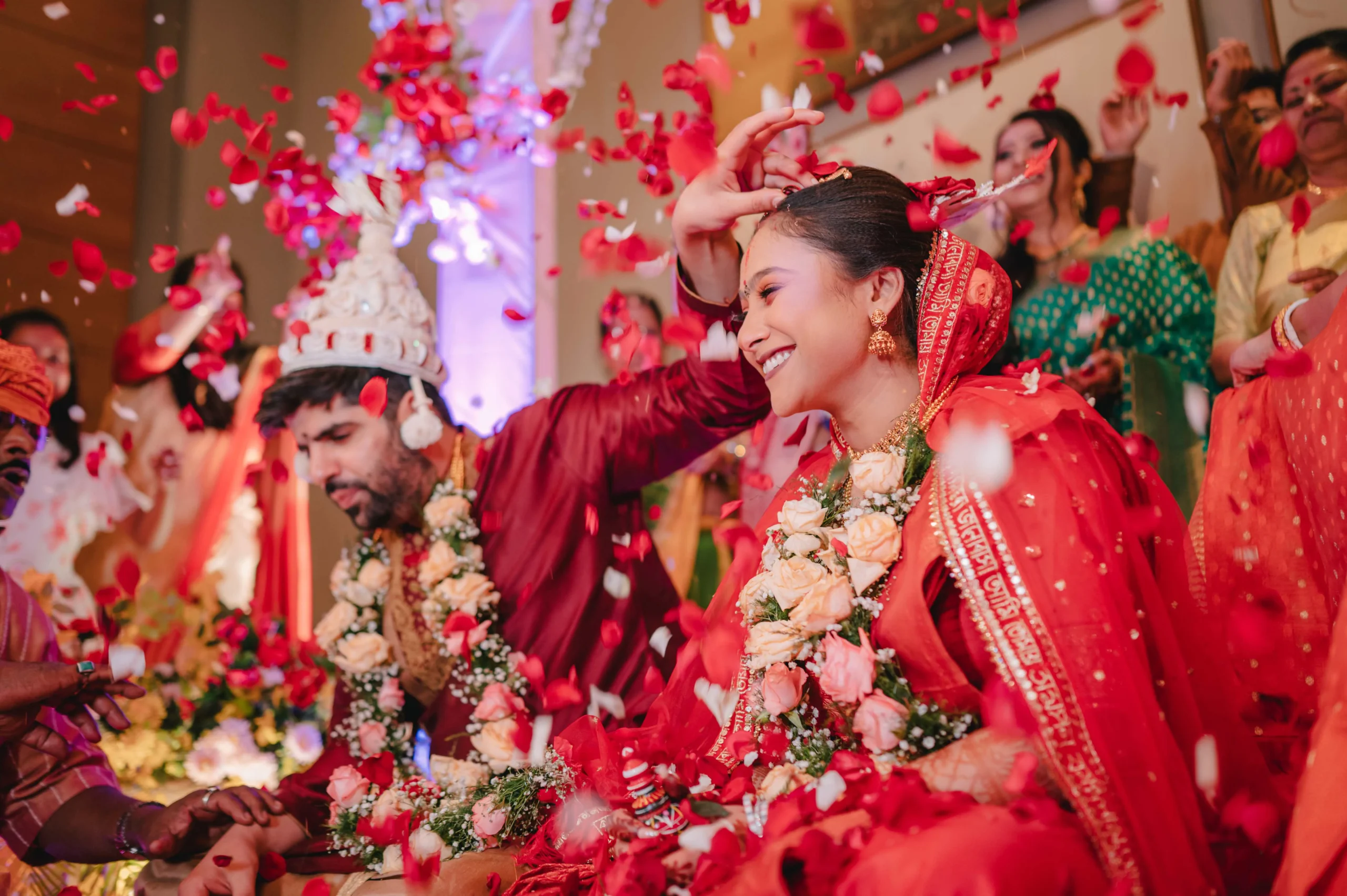
A Bengali wedding is not just a ceremony. It is a collection of rituals, emotions, family traditions, sounds, colours and fleeting moments that come together over several days.
From the anticipation of Gaye Holud to the arrival of the Bor Jatri, from Saat Paak and Shubho Drishti to Mala Badal and Sindoor Daan, every stage of a traditional Bengali wedding has its own visual language.
That is why Bengali wedding photography requires more than good cameras and beautiful compositions. A photographer needs to understand the rhythm of the wedding, know which moments are about to happen and be ready before the ritual begins.
For couples planning a Bengali wedding in Kolkata or anywhere in West Bengal, choosing a photographer who understands these traditions can make a significant difference to the final wedding story.
What Makes Bengali Wedding Photography Different?
Bengali weddings have a distinctive combination of rituals and visual details.
The red and white Benarasi saree, topor, mukut, conch shells, ululation, alpana, flowers, dhoti-panjabi, ceremonial piri and traditional wedding decorations create an instantly recognisable Bengali aesthetic.
But the beauty is not only in the details.
Many of the most important moments happen within a few seconds. Shubho Drishti, for example, is built around the bride and groom’s first meaningful exchange of glances, while Saat Paak involves movement, family participation and changing expressions. Mala Badal follows with another fast-moving sequence.
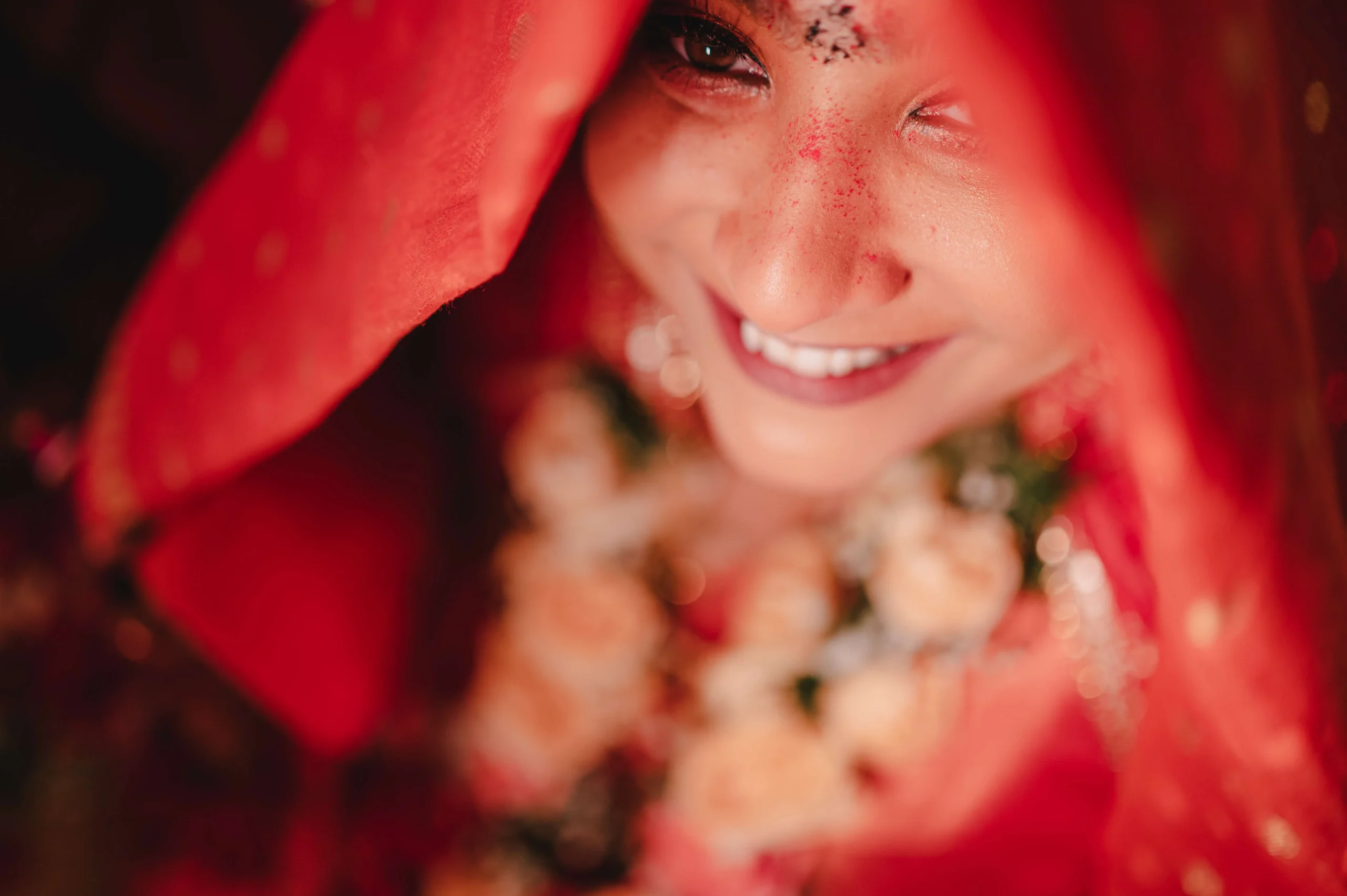
A Bengali wedding photographer therefore needs to anticipate the moment rather than simply react to it.
1. Aiburo Bhaat — The Beginning of the Wedding Story
Aiburo Bhaat is traditionally associated with the bride or groom’s last ceremonial meal before marriage.
From a photography perspective, this is an opportunity to begin the wedding story before the main celebrations start.
Instead of concentrating only on posed portraits, photographers can document:
- Family members preparing the meal
- Traditional Bengali food
- Candid conversations
- Parents and grandparents
- Emotional interactions
- Details of the home and decorations
These photographs help establish the atmosphere of the wedding story.
The strongest wedding albums do not always begin with the bride walking towards the mandap. Sometimes they begin with the quieter moments that happened before anyone was dressed for the camera.
2. Gaye Holud — Colour, Energy and Candid Emotion
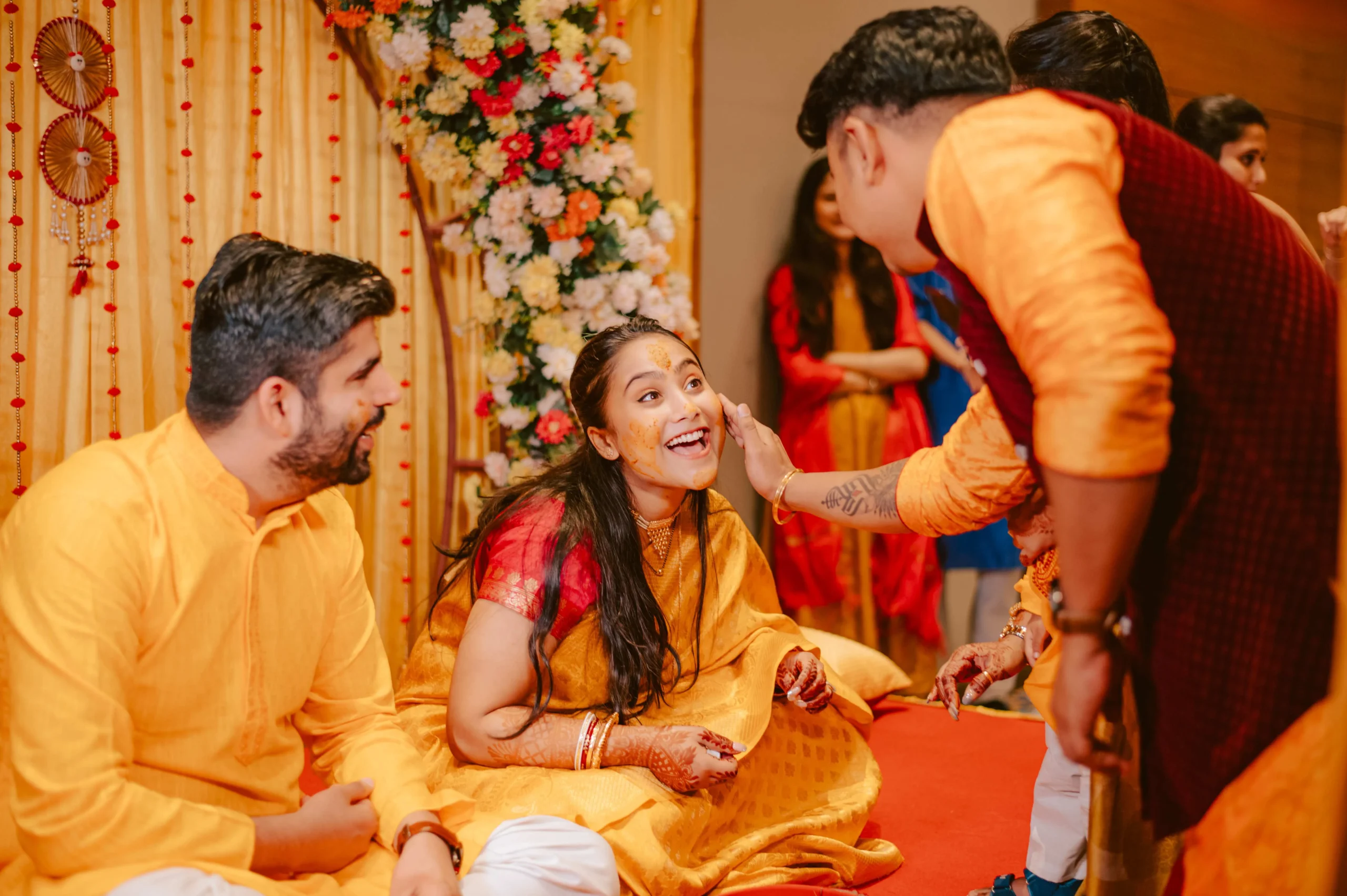
Gaye Holud is one of the most visually expressive parts of a Bengali wedding.
The turmeric ceremony brings together colour, flowers, traditional clothing, family members and plenty of spontaneous interaction. Gaye Holud is also observed across different Bengali communities, although the exact customs and sequence can vary between families.
For a Bengali wedding photographer, this is an ideal opportunity to move away from conventional posing.
Look for:
- The bride or groom reacting to the first application of turmeric
- Parents and grandparents
- Friends teasing the couple
- Hands applying turmeric
- Jewellery and clothing details
- Flowers and ceremonial objects
- Genuine laughter
- Children interacting with the couple
A wide photograph can establish the atmosphere, while close-up photographs can capture the textures, colours and emotions.
3. Bor Jatri and Bor Boron — The Groom Arrives
The arrival of the groom marks a major transition in the wedding story.
The energy changes as the Bor Jatri arrives at the venue and the bride’s family prepares to welcome the groom.
Bor Boron is particularly important because it is not simply a greeting. It is a ceremonial welcome involving family members and traditional elements.
A photographer should therefore avoid photographing only the groom.
Look at the entire interaction:
The mother of the bride.
The relatives waiting at the entrance.
The expressions of the groom and his family.
The ceremonial items.
The moment the groom enters the wedding venue.
These photographs make the sequence feel complete rather than disconnected.
4. Saat Paak — Photographing Movement
Saat Paak is one of the most recognisable rituals of a traditional Bengali wedding.
The bride is traditionally seated on a piri and carried around the groom in seven circles by members of her family.
This is one of the moments where preparation is particularly important.
The photographer needs to understand the direction of movement, anticipate where the bride’s face will appear and maintain enough distance to capture both the ritual and the reactions around it.
Instead of photographing all seven circles from exactly the same position, consider creating a visual sequence:
A wide frame showing the entire ceremony.
A medium frame showing the bride and groom.
A close-up of the bride.
The groom’s reaction.
Family members carrying the piri.
Guests reacting to the ceremony.
The result is a much stronger visual narrative.
5. Shubho Drishti — The Moment Every Bengali Wedding Photographer Waits For
Few moments in Bengali wedding photography are as recognisable as Shubho Drishti.
After the Saat Paak, the bride and groom finally look at each other, traditionally after the bride’s face has been hidden behind betel leaves.
That brief exchange of eyes can last only moments, but it carries enormous emotional weight.
This is not a moment where a photographer should experiment unnecessarily.
The position, focus and exposure should already be prepared.
The photographer should ideally anticipate the moment rather than trying to find the composition after the leaves are lowered.
Capture several perspectives if the venue allows:
- The bride’s expression
- The groom’s reaction
- A frame showing both faces
- The surrounding family reaction
- A wider frame showing the entire ceremony
Shubho Drishti is often considered one of the emotional highlights of a Bengali wedding, which is why timing matters more than complicated camera techniques.
6. Mala Badal — Emotion Meets Celebration
Mala Badal is the exchange of floral garlands between the bride and groom.
In a traditional Bengali wedding, the exchange can become particularly energetic, especially when the couple is lifted or surrounded by family members.
This is where a photographer should be ready for movement.
Don’t concentrate only on the garlands.
Watch the couple’s faces.
Look for laughter, eye contact, teasing, family reactions and the moment immediately after the garlands are exchanged.
A fast shutter speed can help freeze movement, while a wider frame can communicate the excitement surrounding the couple.
The three exchanges can also be photographed as a small visual sequence rather than three identical photographs.
7. Sampradan — Slow Down and Observe
After the more energetic moments, the wedding often moves into quieter and more emotionally intimate rituals.
Sampradan is one such moment.
This is an important family ritual and can carry considerable emotional weight, particularly for the bride’s parents and close relatives.
This is where documentary photography becomes especially valuable.
Rather than directing everyone, observe.
Look for:
- Parents’ expressions
- The bride’s reaction
- The groom’s attention
- Hands and ceremonial details
- The priest conducting the ritual
- Family members watching
Not every important wedding photograph needs to show the couple looking at the camera.
Sometimes the strongest photograph is the expression of a parent standing quietly behind them.
8. Yagna and the Sacred Fire
The Yagna introduces another visual element: fire.
The warm glow of the sacred fire can create beautiful photographs, particularly when combined with the ambient lighting of the wedding venue.
However, photographers should be careful with exposure.
The fire can easily become overexposed while faces become too dark.
This is where understanding the venue lighting, camera exposure and available light becomes more important than simply increasing ISO or using flash.
Try to preserve:
- The glow of the fire
- Facial expressions
- The couple’s interaction
- The priest’s movements
- The surrounding darkness
A controlled balance between highlights and shadows can create a much more cinematic result.
9. Sindoor Daan — A Quiet but Powerful Frame
Sindoor Daan is one of the most significant moments in a traditional Bengali wedding.
The groom applies sindoor to the bride’s hair parting, marking another important transition in the ceremony.
The moment itself can be brief.
That means the photographer should already be in position before it begins.
A close portrait can capture the emotional expression, while a wider photograph can show the context of the ceremony.
Don’t immediately move away after the ritual.
The moments just after Sindoor Daan can sometimes be even more emotional—the bride’s expression, the groom’s reaction and the family’s response can create some of the most meaningful photographs of the entire wedding.
10. Bou Boron, Bidaai and the Beginning of a New Chapter
The wedding story doesn’t necessarily end when the main ceremony finishes.
Bou Boron, Bidaai and other post-wedding traditions can provide some of the most emotional photographs.
For a documentary-style Bengali wedding photographer, these moments should receive the same attention as the main ceremony.
Capture the transition.
The bride leaving her family.
Parents saying goodbye.
Friends trying to hold back tears.
The couple arriving at the groom’s home.
The first moments of the bride entering her new home.
These photographs provide emotional closure to the wedding story.
The Details That Make Bengali Wedding Photos Feel Bengali
A strong Bengali wedding photography collection is not only about photographing rituals.
Details are equally important.
Photographers should look for:
- Red and white Benarasi saree
- Topor and mukut
- Shankha and pola
- Alta
- Sindoor
- Betel leaves
- Conch shells
- Dhak
- Alpana
- Wedding jewellery
- Piri
- Flowers
- Mangal ghot
- Traditional food
- Family heirlooms
- Wedding invitations
- Ritual objects
These details act as visual pauses between the larger photographs.
When combined with portraits and candid moments, they help transform a collection of wedding photographs into a complete story.
Candid vs Traditional Bengali Wedding Photography
The best Bengali wedding photography does not necessarily mean choosing between candid and traditional photography.
Both have their place.
Traditional photographs ensure that important family combinations and rituals are documented clearly.
Candid photography captures the moments that cannot be repeated.
For example, a formal photograph of the bride with her parents is important.
But so is the photograph of her father quietly looking at her when she isn’t watching.
A complete Bengali wedding photography approach should therefore combine:
Traditional portraits + candid moments + ritual documentation + artistic details + cinematic storytelling.
Why Understanding Bengali Rituals Matters for a Photographer
A photographer who does not understand the ceremony may arrive at the correct venue but still miss the correct moment.
Knowing that Saat Paak leads into Shubho Drishti changes how the photographer prepares.
Knowing when Mala Badal happens affects camera position.
Knowing that Sindoor Daan can happen quickly means the photographer should already be ready.
Understanding Bengali wedding rituals is therefore not simply cultural knowledge.
It is part of professional wedding photography.
The photographer is not just documenting what has happened.
They are anticipating what is about to happen.
How to Get Better Bengali Wedding Photographs
A few simple principles can make a significant difference.
Know the ceremony schedule
Ask the family or priest about the approximate order of rituals before the wedding begins.
Arrive early
Use the extra time to understand the venue, lighting and possible shooting positions.
Don’t stay in one position
Change your perspective between wide, medium and close compositions.
Photograph the family
A wedding is not only about the bride and groom.
Parents, grandparents, siblings and friends are part of the story.
Don’t over-direct emotional moments
Some of the best photographs happen when people forget that the camera is there.
Protect the important moments
Technical creativity should never come at the cost of missing a once-in-a-lifetime ritual.
Final Thoughts
Bengali wedding photography is ultimately about understanding the difference between a ritual and a moment.
A ritual may last several minutes.
The emotion inside it may last only a second.
The bride’s expression when she finally looks at the groom during Shubho Drishti.
The laughter during Mala Badal.
A parent’s eyes during Sampradan.
The silence before Sindoor Daan.
The tears during Bidaai.
These are the moments that give a Bengali wedding its identity.
At LMP Weddings, we believe wedding photography should preserve not only how the wedding looked, but also how it felt.
Because years later, the most valuable photograph may not be the most perfectly posed one.
It may simply be the photograph that brings the entire moment back.
Frequently Asked Questions
What is Bengali wedding photography?
Bengali wedding photography is the documentation of a Bengali wedding through portraits, candid moments, rituals, family interactions, details and emotional storytelling. It often includes ceremonies such as Gaye Holud, Bor Boron, Saat Paak, Shubho Drishti, Mala Badal, Sampradan and Sindoor Daan.
Which Bengali wedding rituals should a photographer never miss?
Important moments include Gaye Holud, Bor Boron, Saat Paak, Shubho Drishti, Mala Badal, Sampradan, Yagna, Sindoor Daan and Bidaai. The exact rituals and sequence can vary between families.
Why is Shubho Drishti important in Bengali wedding photography?
Shubho Drishti represents the bride and groom’s auspicious first gaze at one another and is one of the most visually and emotionally significant moments of a traditional Bengali wedding.
Should I choose candid or traditional Bengali wedding photography?
A combination of both is ideal. Traditional photography ensures important rituals and family portraits are properly documented, while candid photography preserves spontaneous emotions and interactions.
What should I look for in a Bengali wedding photographer in Kolkata?
Look for a photographer who understands Bengali wedding rituals, can anticipate important moments, works comfortably in challenging indoor lighting and can combine traditional documentation with candid and cinematic storytelling.
How many photographers are needed for a Bengali wedding?
The ideal team depends on the size, number of events and venue. Larger Bengali weddings with multiple simultaneous activities generally benefit from more than one photographer so that important family moments and parallel preparations are not missed.